
London to Host the European IDAHOT+ Forum in 2027 — What It Means, and What Must Follow
London to Host the European IDAHOT+ Forum in 2027 — What It Means, and What Must Follow
A landmark announcement for LGBTQIA+ rights in Europe has arrived, serving as a critical moment of reckoning for the United Kingdom at home.
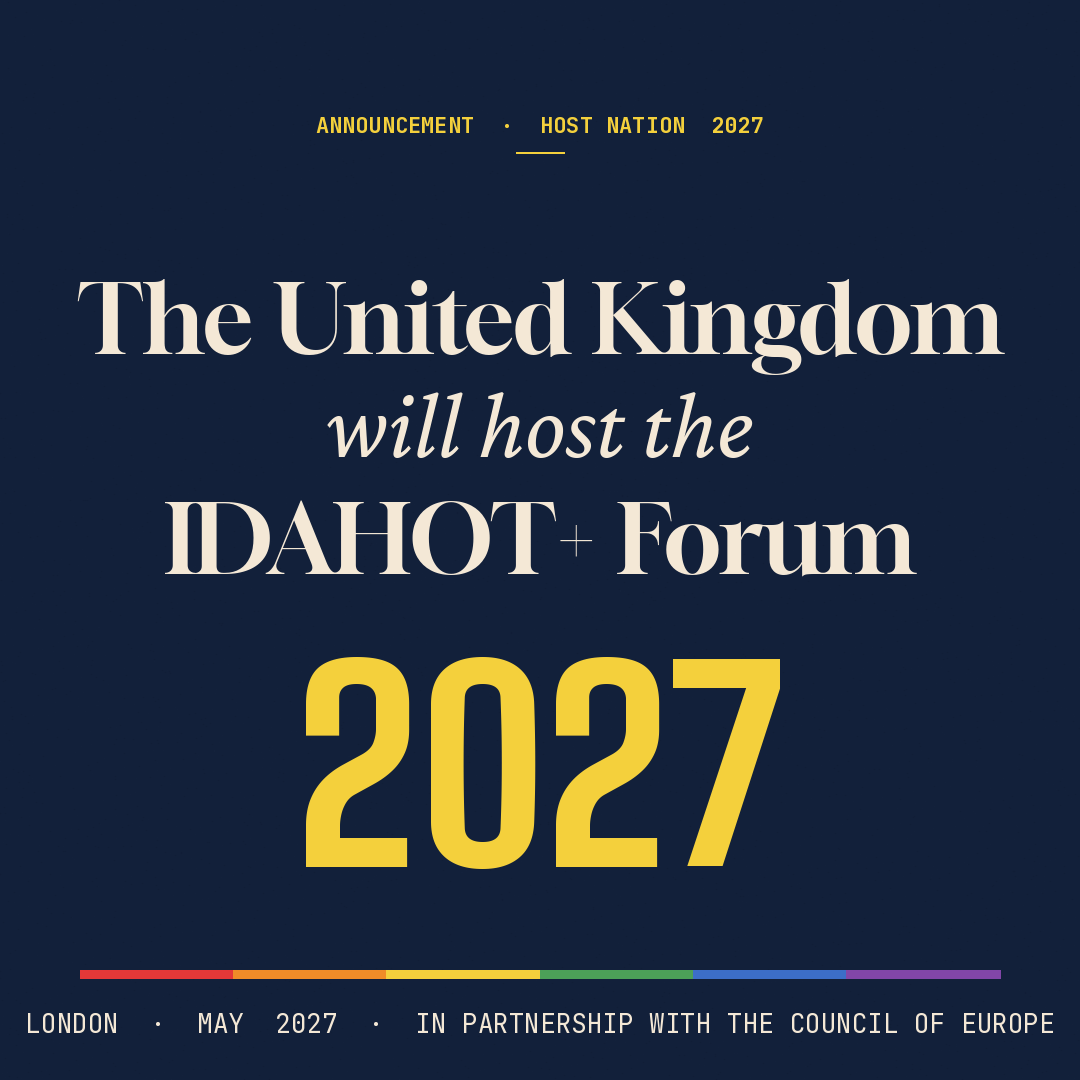
For the first time since the European IDAHOT+ Forum was founded in 2013, the United Kingdom will host the event. In May 2027, London will convene governments, civil society, policymakers, and advocates from across the continent. This announcement was made this week in Copenhagen, where Lord Collins of Highbury, the government’s spokesperson for equalities, formally accepted the role on behalf of the UK during the 2026 Forum.
Alongside the hosting announcement, the government committed £21 million over three years (2026 to 2029) to advance global LGBTQIA+ rights through civil society partnerships. This includes £19.5 million in Official Development Assistance and £1.5 million in non-ODA funding, all aligned with the UK Strategic Framework on International LGBT+ Rights.
For our community, this is a significant development. It deserves an honest response.
Why the European IDAHOT+ Forum Matters
The European IDAHOT+ Forum is not merely a symbolic gathering. As the primary state-organised European LGBTQIA+ conference, it exists to drive cooperation between governments and civil society—connections that have rarely mattered more. Past forums in Reykjavík, Valletta, and Copenhagen have produced ministerial statements and shifted policy frameworks by providing a rare shared table for activists and ministers.
In 2027, that table will be in London.
The Forum will arrive at a continent where LGBTQIA+ rights are not advancing uniformly. In several European nations, hard-won protections are being rolled back, and “LGBT-free zones” have appeared in living memory. Furthermore, gender-recognition reform has stalled or been reversed, and anti-trans rhetoric has moved from the fringes into mainstream political discourse. Hosting in London places the UK at the centre of a continental conversation about what we are willing to defend—and what we are prepared to lose.
The Impact on the UK’s International Standing
This announcement strengthens the UK’s position as a convening power on LGBTQIA+ equality. While hosting brings prestige, it also brings expectation. Foreign governments, international NGOs, and European civil society will arrive in London with their own questions about the current state of rights in the UK.
The £21 million package is substantive. If used well—channelled through resilient local movements and legal reform partners—it could meaningfully support communities in jurisdictions where being LGBTQIA+ remains criminalised or unsafe. Civil society, both at home and abroad, will be watching how this funding is allocated. They will be looking to see if grassroots and community-led organisations sit at the centre of delivery, not the margins.
The diplomatic signal is welcome. Pairing financial commitment with visible international leadership is the kind of dual-track approach that has historically produced progress, most notably in the campaigns against the criminalisation of same-sex relations in Commonwealth jurisdictions.
What Must Follow at Home
International leadership only carries weight when matched by domestic credibility. This is where Capital Pride London believes the conversation must sharpen between now and May 2027.
The government has highlighted recent progress, such as:
-
Making anti-LGBTQIA+ hate crimes an aggravated offence under the Crime and Policing Act.
-
Allocating £0.5 million for specialist LGBTQIA+ domestic abuse services.
-
Continuing work on a ban on conversion practices.
These are meaningful steps, and we acknowledge them. However, international partners arriving in London will likely ask questions regarding these unresolved issues:
1. A Fully Trans-Inclusive Ban on Conversion Practices
The government has reiterated its intention to legislate, but intention is not law. Hosting the Forum in 2027 without delivering this commitment would present a significant credibility problem on the continental stage.
2. Addressing Historically High Hate Crime
Aggravated-offence status is the correct legal framework. However, the true test of this framework is the resourcing for prevention, reporting, and survivor support.
3. Resolving the Trans Healthcare Crisis
Waiting times of years, not months, sit alongside a public discourse that has become increasingly hostile. The international community will surely notice the gap between UK funding for trans rights abroad and trans access to care at home.
4. Sustaining Community Infrastructure
Pride organisations, LGBTQIA+ youth services, Black and global majority LGBTQIA+ groups, and grassroots organisations have been operating at the edge of viability. The civil society partnerships funded by this package abroad should be matched by a serious conversation about civil society sustainability at home.
None of these critiques diminish the value of hosting the Forum. In fact, they are the very reason why hosting matters. The Forum will be more powerful if the UK arrives in 2027 having met its own standards.
Capital Pride London’s Position
Capital Pride London welcomes the announcement. London is the right city to host this conversation—a city whose LGBTQIA+ community has historically led, organised, and refused to be quiet.
We will be engaging with the Forum, with civil society partners across Europe, and with the government on the path to May 2027. We will also be clear: hosting an international forum on LGBTQIA+ rights places obligations on the host. We intend to hold this government—and any government—to those obligations.
A forum worth hosting is a forum worth living up to.
Comment
Comments are closed.


 English
Pingback: PODCAST – Trans Intimacy: The Private Parts – What The Trans!?